Reviews

Album review: Joyce Manor – I Used To Go To This Bar
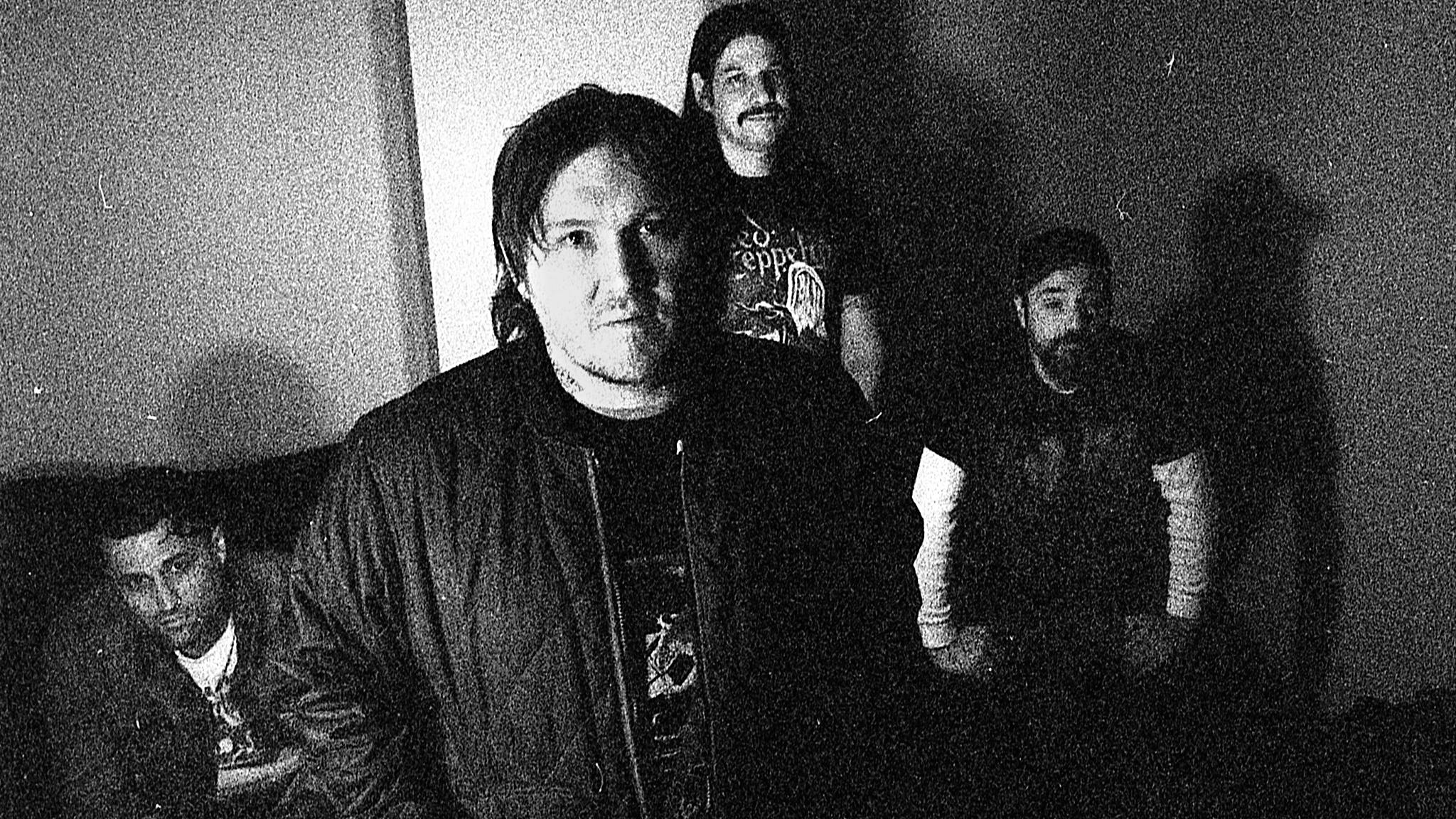
Californian pop-punk mainstays Joyce Manor deliver sunbeaten hooks and salt-sweet nostalgia on supremely listenable seventh album I Used To Go To This Bar.
Bad Religion have compared Barry Johnson to Hemingway. So why isn’t the Joyce Manor mainman using his pen to digest the world as it is on their new album? He is, he says, just not so directly. “It’s still cathartic…”
America, 2026. It’s a country teetering on the edge of collapse, one buckling under the weight of increasingly overt fascism, of deep division within its population, of myriad problems. Very few politicians – or people – are offering the right solutions.
Understandably, a lot of bands from the U.S. are writing about all this. It’s hard to ignore. But there’s no hard and fast rule that says you should, that you have to.
Joyce Manor have never been ones to pen overtly political songs. Formed in the outskirts of Los Angeles in Torrance, California in 2008, the band have tended to focus more on matters of the heart and soul, making (very) short, incisive albums about life, love, loss and the folly of youth. In fact, you’d be hard-pressed to find someone who can so succinctly document the human condition as frontman Barry Johnson.
“If Barry was a novelist, he’d be Ernest Hemingway,” is how Bad Religion legend and Epitaph head honcho Brett Gurewitz describes the singer as he prepares to release new album I Used To Go To This Bar. “To me, they’re among the most important bands of the last two decades.”
Of course, Joyce Manor – completed by guitarist Chase Knobbe and bassist Matt Ebert – are well aware of what’s happening. They’re not not paying attention or ignoring it. It’s just that they’re not writing about it directly.
“I think the amount of travelling and touring that we’ve done in the last few years has given us kind of a strange and unique perspective, by experiencing the way things have changed,” explains Matt. “Everything’s a little bit more difficult than it used to be, and more expensive. It’s scary. And it’s been interesting to see the world change around us as we travel through it.”
“It probably shows up in the songs in some way,” considers Barry, “but you go to other countries and people are like, ‘Is it really that gnarly in America?’ And it’s like, ‘Well yeah, it sort of is.’
“It actually is, yeah,” emphasises Matt with a nervous chuckle.
The reason that I Used To Go To This Bar doesn’t directly address that is because the way Barry writes isn’t particularly reactive. Rather than a response to his immediate environment and situations, he tends to Frankenstein random lyrical and melodic ideas he’s had lying around for a while in order to create something new from something old(er).
“It feels like you get a piece of a thread,” he says, “and then you just keep pulling it. You don’t want to pull it too hard or you’ll break it, and it’s like, ‘Fuck, I lost it.’ So you just gently unearth it. But sometimes when you do break it, it’s like, ‘Okay, well, I like this little bit’ – and then that might make its way into a song later.”
Though that happened a little less with this record – which was made with a rotating cast of drummers that included Joey Waronker, who’s played in R.E.M. and recently sat behind the kit for Oasis’ reunion world tour – it still happened. Well, Whatever It Was, for instance, has its roots in one of Barry’s earliest songwriting escapades. But on the whole, fewer of these songs have their origins in distant years.
The frontman is keen to point out, however, that just because they aren’t addressing, say, ICE raids, it doesn’t mean these songs aren’t reflective of real life. At the same time, he refutes the idea that they offer an escape from the harrowing brutality of things in 2026.
“I think maybe if you’re in your bedroom with headphones on, that could be a distraction from the stress of the world,” he says. “But going to a show and participating in a crowd, I wouldn’t say that’s escapist, personally. That’s also life. It’s a weird thing to think of your life as just the shitty, stressful, horrible part, and that life isn’t comprised of going off at an awesome show. That’s also life. They’re both life. It’s a cathartic, enjoyable part, but it’s no less real.”
And so, I Used To Go To This Bar shines a spotlight on a particular slice of life. It’s one full of memories and nostalgia, as Joyce Manor albums so often are, but also riddled with a nervous energy and existential anxiety that will be familiar to anyone trying to get through the day.
It’s not explicitly about what’s happening in the world, but it channels its malaise well. The band’s fifth full-length on Epitaph, it was produced by the label boss himself – he volunteered to do so after hearing the first demos of these songs.
“I was talking to Brett,” remembers Barry, “and he was like, ‘You know, it kind of hurt my feelings that you didn’t ask me to produce the last record. I thought you would ask me to produce it.’”
That was amended this time. Given Brett’s revered history and status in the punk world, was it at all intimidating to have him behind the board?
“He’s really good at telegraphing the right sort of energy into a room,” enthuses Chase. “So it wasn’t really intimidating, but there were times recording backing vocals where you’re just like, ‘Oh my God, he did this with Rancid!’ But it was really a mixture of feeling lucky and grateful that we had that opportunity, but also feeling proud that we’re working together. We didn’t win some kind of contest to record one song with Brett Gurewitz – it was like, ‘We belong here.’”
“Yeah, we’ve known Brett for 10 years, and have worked closely with him,” adds Barry. “He’s A&Rd our records since Never Hungover Again [2014], and he’s been really involved in almost every step of the way since then.”
Despite the band’s friendship and familiarity with him, Brett’s initial opinion about the new songs didn’t actually sit with Barry particularly well. The record needed, the producer said, “some more up-tempo stuff”.
“[It was like] ‘What the fuck are you talking about? Mind your business, I’ll write the songs,’” he says. “But it kind of nagged at me, and I knew he was right.”
It also spurred Barry into action. The first song that really came together after that appraisal was the title-track, inspired by “the very visceral feeling of walking by a bar during the day and just smelling like stale beer and just like wanting to get really fucking drunk at 1pm.”
“It’s kind of like your whole day could go differently. You’re like, ‘Damn, that smells like fun!’ The smell of bar carpet just does something in my brain. But then you look in the bar and it’s beyond depressing in there.”
In some ways, the years of memories and stains and smells lingering in the fabric of the carpet are a perfect metaphor for this record. It’s the collision of the past with the not-quite-present, the nostalgia for what was merging with an existential awareness of the current moment, mixed with just a hint of depression.
That temporal contradiction, even on this album, remains the paradox at the heart of Joyce Manor’s songs, and of Barry’s creative mind.
“I tend to write a lot about maybe 10 or 15 years earlier [than I currently am],” he says. “Even in my mid-20s. At 27, I was thinking a lot about being 17 or 18. Obviously, I probably wasn’t doing a ton of that when I was 22, but even then still maybe some. Things get a little more context as you get a little distance from them.”
Give it a decade or so, then, and – if there’s still a world left to inhabit – Joyce Manor will likely write the perfect album to sum up our current interesting times. For now, though, Barry is trapped in a different era, perpetually walking past that bar and deciding on a decision that may alter his whole day, or perhaps even his entire life.
I Used To Go To This Bar is released on January 30 via Epitaph.
Read this next: